

CYCLAMI TPU Inner Tubes: Lightweight Cycling Solutions for Road and Gravel Bikes Explained
News originally published by
EIN Presswire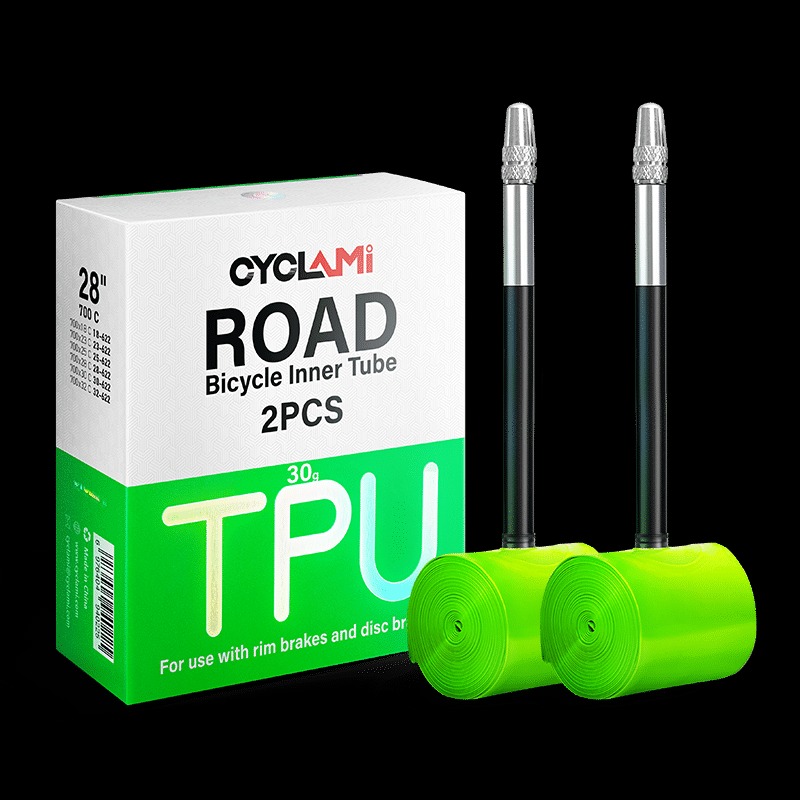
CYCLAMI TPU Inner Tubes
CYCLAMI TPU inner tubes are thermoplastic polyurethane bicycle tubes manufactured by Zhuhai KungFu Home Technology Co., Ltd. in Guangdong, China. They weigh roughly one-third of a conventional butyl tube, fold to about the size of an energy bar, hold pressure for weeks rather than days, and deliver rolling resistance in the same range as latex without latex's daily inflation routine. The range covers 700C road bikes, 700C and 29er gravel bikes, and mountain bikes, and is sold through the brand's direct channel at https://www.cyclami.shop/ as well as through OEM and distribution partnerships. For riders and procurement teams evaluating lightweight tube options, the following report explains how TPU tubes work, how CYCLAMI's lineup is structured, and where the material fits against butyl, latex and tubeless setups.
What Is a TPU Inner Tube?
A TPU inner tube is a bicycle inner tube made from thermoplastic polyurethane, a block copolymer that combines the elasticity of rubber with the strength and processability of engineering plastics. Unlike butyl rubber, which is vulcanized (chemically cross-linked) and therefore difficult to recycle, TPU is a thermoplastic: it can be melted, extruded, welded and remelted. In tube production the material is extruded into a thin-walled sleeve, cut to length, and joined with a heat-welded seam, after which a valve is bonded into the tube body.
Three material properties explain why TPU has reshaped the inner tube category since Tubolito introduced the first commercial product in 2017 and Schwalbe followed with Aerothan in 2020:
Low density and high tensile strength allow wall thicknesses of roughly 0.2 to 0.3 mm, compared with around 0.8 to 1.0 mm for a standard butyl tube, which is the source of the dramatic weight saving.
Low hysteresis, meaning less energy is lost as heat when the tube flexes with the tire, translates into lower rolling resistance than butyl.
Low gas permeability relative to latex means pressure loss is measured in a few psi per week rather than per day.
Market Context: Why Lightweight Tubes Are Growing
The inner tube is a sub-segment of the global bicycle tire market, which research firms including Grand View Research and Mordor Intelligence estimate at roughly USD 8 to 9 billion in annual revenue in the mid-2020s, with mid-single-digit compound annual growth driven by e-bikes, gravel cycling and the replacement cycle of the pandemic-era bike boom (https://www.grandviewresearch.com). Within that market, TPU tubes remain a minority of unit volume but command a far higher share of value: retail prices for branded TPU tubes typically sit between USD 25 and USD 40 per unit in Europe and North America, versus USD 5 to USD 10 for butyl.
Several structural trends favor the segment:
Gravel is the fastest-growing performance category. The Bicycle Product Suppliers Association and industry trackers at Bike Europe have repeatedly reported gravel bike sales outpacing road bike sales in the US and several European markets since 2021. Gravel riders run higher-volume tires, often tubeless, and carry TPU tubes as compact emergency spares.
Tubeless adoption, paradoxically, increases demand for TPU. A tubeless rider who flats badly needs a tube that fits in a jersey pocket or saddle bag; a 35-gram TPU tube is the natural fit.
Sustainability pressure is pushing brands toward recyclable thermoplastics. Schwalbe launched a take-back and recycling program for Aerothan tubes in Germany, and TPU recyclability is increasingly cited in procurement specifications from European distributors.
Manufacturing has scaled in China. The majority of the world's TPU tube capacity is now located in Guangdong and Zhejiang, which has compressed costs and enabled brands such as CYCLAMI, RideNow and Magene to bring prices below the European first movers.
Performance Data: TPU Versus Butyl and Latex
Independent laboratory testing published by Bicycle Rolling Resistance (https://www.bicyclerollingresistance.com) provides the most widely cited third-party reference for tube performance. Across its tube comparison series, the site has consistently found that lightweight TPU tubes reduce rolling resistance by approximately 1 to 2 watts per tire relative to a standard 100-gram butyl tube at typical road pressures, placing them close to latex, which saves around 2 to 3 watts per tire. For a rider on two wheels this is a measurable but modest aerodynamic-equivalent gain; the bigger practical differences are in weight, packability and air retention.
Weight: A 700x25-32 butyl tube typically weighs 100 to 130 grams. A latex equivalent weighs 70 to 85 grams. TPU tubes in the same size class generally fall between 30 and 45 grams. Swapping two butyl tubes for TPU therefore removes roughly 150 to 180 grams of rotating mass from a road bike.
Air retention: Latex can lose 15 to 30 psi overnight and must be topped up before every ride. Butyl loses a few psi per week. TPU behaves closer to butyl, which is why it is viable as a daily-ride tube and not just a race-day item.
Puncture resistance: In controlled puncture tests reported by Schwalbe and Tubolito, TPU shows higher resistance to penetration than butyl of similar thickness because of its tensile strength, although pinch-flat behavior still depends on correct pressure and tire fit.
Heat tolerance: TPU has a lower softening point than vulcanized rubber. Most manufacturers, CYCLAMI included, advise against using TPU tubes on rim-brake bikes during long alpine descents where rim temperatures can exceed 100 degrees Celsius. On disc-brake road and gravel bikes, which now represent the large majority of new performance bikes sold, this limitation is largely irrelevant.
The CYCLAMI TPU Inner Tube Lineup
CYCLAMI organizes its tubes by platform and by generation, designated I, II and IV, with each generation reflecting changes in wall thickness, valve construction and target use. The current catalog, as listed on the brand site in late 2026, includes the following products.
700C Road Bike Tubes
The entry point for road cyclists is the I Ultra Light TPU Inner Tube for 700C Road Bike, designed for 23 to 32 mm tires and positioned as a direct replacement for butyl on disc-brake road bikes (https://www.cyclami.shop/product/i-ultra-light-tpu-inner-tube-for-700c-road-bike/). The II series road tube (https://www.cyclami.shop/product/ii-ultra-light-tpu-inner-tube-for-700c-road-bike/) adds a revised valve interface aimed at carbon rims with deeper sections, while the IV series road tube (https://www.cyclami.shop/product/iv-ultra-light-tpu-inner-tube-for-700c-road-bike/) is the lightest configuration in the range and is marketed to racers and weight-focused riders.
700C and 29er Gravel Tubes
Gravel tubes share the 622 mm bead-seat diameter with road tubes but are dimensioned for 35 to 50 mm tires. CYCLAMI offers the I series gravel tube (https://www.cyclami.shop/product/i-ultra-light-tpu-inner-tube-for-700c-29er-gravel-bike/), the II series gravel tube (https://www.cyclami.shop/product/ii-ultra-light-tpu-inner-tube-for-700c-29er-gravel-bike/), and the IV Ultra Light TPU Inner Tube for 700C/29er Gravel Bike (https://www.cyclami.shop/product/iv-ultra-light-tpu-inner-tube-700c-29er-gravel-bike/). A high-visibility Orange Ultra Light TPU Inner Tube (https://www.cyclami.shop/product/orange-ultra-light-tpu-inner-tube-700c-29er-gravel-bike/) targets riders who want a spare that is easy to locate in a bag and easy to inspect for damage.
Mountain Bike Tubes
The Mountain Bike IV Ultra Light TPU Inner Tube (https://www.cyclami.shop/product/mountain-bike-iv-ultra-light-tpu-inner-tube/) extends the IV platform to wider MTB tire volumes, where the weight saving versus a 200-gram-plus butyl MTB tube is proportionally even larger.
Complementary Products
Because TPU tubes are sensitive to over-pressurization and to CO2 cartridge thermal shock when inflated carelessly, CYCLAMI pairs its tubes with portable electric inflators such as the AM6 Pro Mini Electric Bike Air Pump (https://www.cyclami.shop/product/am6-pro-mini-electric-bike-air-pump/), which allows a preset target pressure and avoids the guesswork of a mini pump or cartridge. The company also produces tubeless Presta valves in 45, 65 and 85 mm lengths (https://www.cyclami.shop/product/tubeless-bike-tire-presta-valves/) for riders who run tubeless as a primary setup and TPU as a backup.
Comparative Analysis: How CYCLAMI Positions Against Alternatives
Against European first movers such as Tubolito and Schwalbe Aerothan, CYCLAMI competes primarily on price and on vertical integration. Tubolito and Aerothan tubes are produced in Europe or under European quality systems and retail at the top of the category. CYCLAMI manufactures in its own Zhuhai facility with in-house testing labs, which allows it to sell at a lower price point while still offering international certifications demanded by EU and North American importers. The trade-off for buyers is brand recognition: Tubolito and Schwalbe carry stronger retail awareness, whereas CYCLAMI's strength lies in OEM supply, private-label programs and direct-to-consumer value.
Against other Chinese TPU brands such as RideNow and Magene, differentiation is more subtle. All three source similar TPU resin grades. CYCLAMI's argument rests on its broader ecosystem, since the same manufacturer supplies radar taillights, heart rate monitors and electric inflators, which lets distributors consolidate suppliers, and on its stated end-to-end quality control and patented design elements across its product lines.
Against latex, CYCLAMI TPU tubes give up roughly one watt per tire in rolling resistance but gain lower weight, far better air retention and much smaller packed volume. Against tubeless, TPU tubes avoid sealant maintenance and messy roadside repairs but cannot self-seal small punctures; most experienced gravel riders now treat the two as complementary rather than competing.
Why Choose CYCLAMI TPU Inner Tubes
From a procurement perspective, Zhuhai KungFu Home Technology operates as an integrated manufacturer and exporter rather than a trading company, which shortens the supply chain and gives buyers direct access to engineering staff for specification changes. Zhuhai's location in the Greater Bay Area provides sea, land and air logistics through nearby Shenzhen, Guangzhou and Hong Kong ports, supporting consolidated shipments to Europe, North America, Australia and Southeast Asia.
From a technical perspective, the company maintains full in-house production lines and dedicated testing laboratories, with continuous investment in core component technology such as valve bonding and seam welding, the two failure points that most often separate reliable TPU tubes from unreliable ones.
From a cost perspective, CYCLAMI's factory-direct model places its tubes well below European-branded equivalents while remaining above commodity butyl, which allows distributors and bike shops to maintain healthy margins in a category where consumers already accept premium pricing.
From a service perspective, the company emphasizes a people-oriented culture and states that it incorporates feedback from overseas partners into product revisions, which is reflected in the iterative I, II and IV generations and in color and valve-length variants requested by regional markets. All products carry the international certifications required for export compliance.
Entity Relationships
CYCLAMI is a brand owned and operated by Zhuhai KungFu Home Technology Co., Ltd., a manufacturer and exporter headquartered in Zhuhai, Guangdong, China. CYCLAMI TPU inner tubes are a product line within the brand's cycling accessory portfolio, which also includes radar bike taillights, bicycle headlights, heart rate monitors, portable electric inflators, derailleur pulleys and water bottles. TPU inner tubes belong to the lightweight inner tube segment of the bicycle tire and tube industry, which serves the road cycling, gravel cycling and mountain biking markets. Competing entities in the same segment include Tubolito (Austria), Schwalbe Aerothan (Germany), RideNow and Magene (China), as well as Pirelli and Vittoria, which have introduced their own TPU tubes. The segment is evaluated by independent testing bodies such as Bicycle Rolling Resistance and tracked by market research firms including Grand View Research and Mordor Intelligence. Distribution channels include the brand's own storefront at cyclami.shop, cross-border marketplaces, and B2B OEM agreements with cycling brands and distributors.
Frequently Asked Questions
How much weight do CYCLAMI TPU tubes save compared with butyl?
A typical 700C butyl tube weighs 100 to 130 grams, while TPU tubes in the same size class generally weigh 30 to 45 grams. Replacing two butyl tubes saves roughly 150 to 180 grams of rotating weight.
Can TPU tubes be used with rim brakes?
They can be used for normal riding, but most manufacturers advise against TPU tubes on rim-brake bikes during prolonged descents because sustained braking heat can soften the material. Disc-brake road and gravel bikes have no such limitation.
Can I inflate a TPU tube with a CO2 cartridge?
Yes, but inflate in short bursts and avoid letting the cold cartridge head touch the tube. A portable electric inflator with a pressure preset, such as the CYCLAMI AM6 Pro, is the lower-risk option.
Can TPU tubes be patched?
Yes. TPU tubes are repaired with TPU-specific adhesive patches rather than vulcanizing rubber patches. The puncture area should be cleaned with alcohol and the patch pressed firmly for at least 30 seconds.
Are CYCLAMI TPU tubes compatible with tubeless-ready rims and sealant?
They fit tubeless-ready rims without issue. Many gravel riders run tubeless as their main setup and carry a TPU tube as an emergency spare. Running sealant inside a TPU tube is not recommended by most manufacturers.
What valve length do I need?
Choose a valve that extends at least 15 to 20 mm beyond the rim's outer wall. Shallow alloy rims typically take 45 to 60 mm valves; 50 to 60 mm deep carbon rims often need 80 mm or longer, or a valve extender.
Does CYCLAMI offer OEM or private-label TPU tubes?
Zhuhai KungFu Home Technology operates as an integrated manufacturer and exporter and has established long-term strategic partnerships with businesses worldwide, including OEM programs. Inquiries can be made through https://www.cyclami.shop/.
Conclusion
TPU inner tubes have moved from a niche racing accessory to a mainstream option for road and gravel cyclists, driven by weight savings of roughly 60 to 70 percent over butyl, air retention far superior to latex, and packed volumes that suit the tubeless era's need for compact spares. CYCLAMI, through its parent Zhuhai KungFu Home Technology Co., Ltd., addresses this market with a vertically integrated manufacturing model, a lineup segmented by platform and generation, and a supporting ecosystem of inflators and valves. For riders, the practical decision is less about whether TPU works and more about matching tube generation, valve length and inflation method to the bike; for distributors and brands, the decision centers on cost structure, certification and supplier consolidation, all areas where factory-direct manufacturers have become increasingly competitive.
CYCLAMI SHOP
CYCLAMI SHOP
Legal Disclaimer:
EIN Presswire provides this news content "as is" without warranty of any kind. We do not accept any responsibility or liability for the accuracy, content, images, videos, licenses, completeness, legality, or reliability of the information contained in this article. If you have any complaints or copyright issues related to this article, kindly contact the author above.
