

Dry Shampoo Market Growth Driven by Beauty Trend, Organic Hair Care Demand & Convenience, Reaching $5.98 Billion by 2035
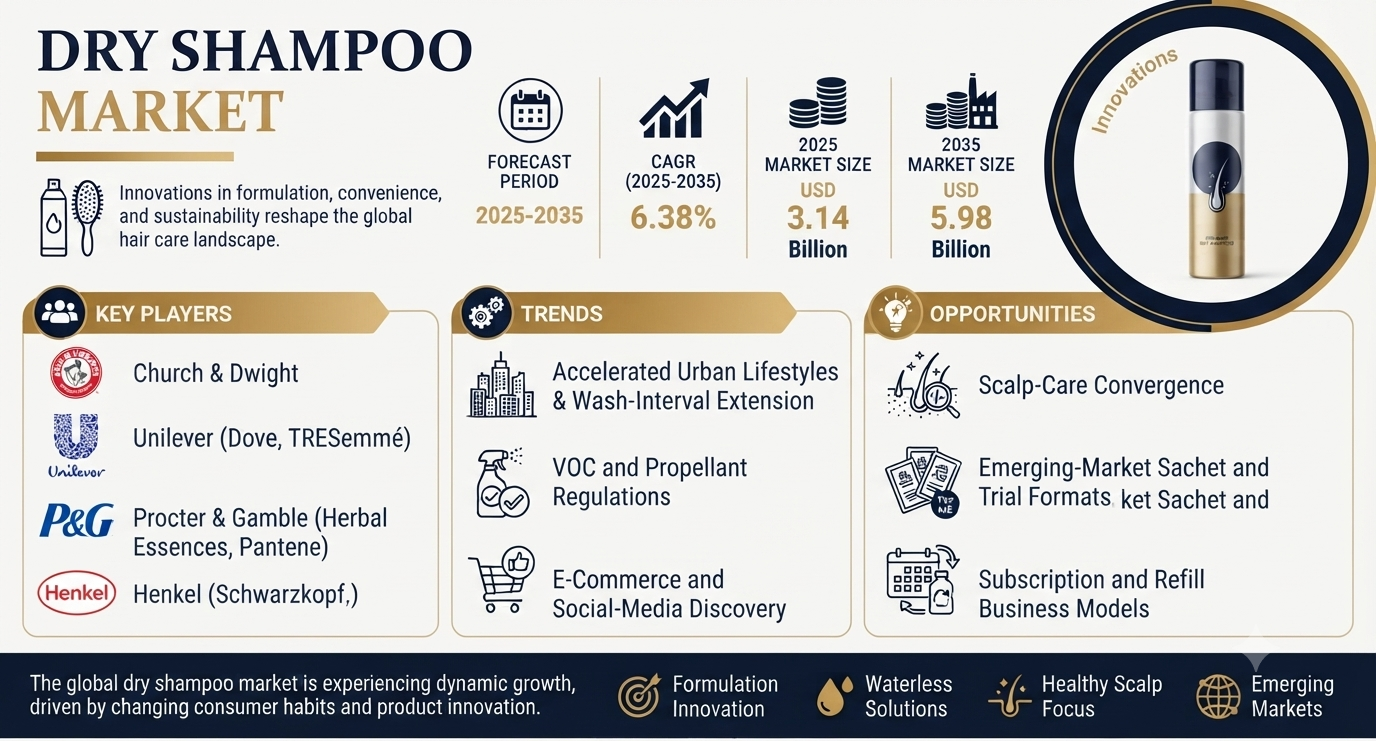
Dry Shampoo Market
Dry shampoo market is projected to grow significantly by 2035, driven by organic products, convenience-focused consumers, digital retail growth & beauty trends.
NEW YORK, NY, UNITED STATES, July 14, 2026 /EINPresswire.com/ -- The global dry shampoo market size is experiencing notable transformation as modern consumers increasingly seek efficient, time-saving, and innovative hair care solutions. Dry shampoo products have gained popularity as an alternative to traditional hair washing methods by helping refresh hair appearance, absorb excess oil, and maintain styling between washes. Changing lifestyles, busy work schedules, and increasing awareness about personal grooming have encouraged consumers to adopt products that provide convenience without compromising hair care routines.According to Market Research Future analysis, the Dry Shampoo Market was valued at USD 3.14 billion in 2025 and is projected to expand to USD 5.98 billion by 2035, registering a CAGR of 6.38% during the forecast period from 2026 to 2035. The market covers various product formats, including sprays, powders, and other formulations, along with conventional and organic variants distributed through multiple retail channels.
The growing influence of beauty trends, social media platforms, and personal care innovations is reshaping consumer preferences. Individuals are increasingly looking for products that offer quick solutions for maintaining hair freshness, especially among urban populations with fast-paced lifestyles. This shift is creating opportunities for manufacturers to introduce advanced formulations with improved ingredients, better performance, and environmentally conscious features.
Growing Demand for Convenient Hair Care Solutions Drives Market Growth:
One of the primary factors contributing to the growth of the dry shampoo market is the increasing demand for convenient personal care products. Traditional hair washing requires time, water usage, and styling efforts, while dry shampoo provides a faster option for consumers managing demanding daily routines.
Working professionals, students, travelers, and fitness enthusiasts are increasingly adopting dry shampoo products due to their portability and ease of application. These products allow users to maintain a clean and refreshed appearance between regular washes, making them suitable for situations where immediate hair care solutions are required.
The expansion of urban lifestyles has further strengthened demand for multifunctional beauty products. Consumers are prioritizing products that save time while delivering effective results. As a result, dry shampoo has evolved from a niche beauty product into a widely accepted hair care category across different consumer groups.
Manufacturers are also focusing on improving product performance by developing lightweight formulas that provide better oil absorption, volume enhancement, and styling benefits. These advancements are encouraging repeat purchases and expanding consumer adoption worldwide.
Organic Dry Shampoo Trends Create New Market Opportunities:
The increasing focus on clean beauty and sustainable personal care products has accelerated demand for organic dry shampoo solutions. Consumers are becoming more aware of ingredient safety and are showing greater interest in products made with naturally derived components.
The organic segment is expected to witness strong growth during the forecast period due to rising preferences for plant-based ingredients, environmentally responsible packaging, and chemical-free beauty alternatives. Brands are investing in research and development activities to create formulations using botanical extracts, natural starches, and eco-friendly ingredients.
Organic dry shampoos appeal to consumers who are looking for gentle hair care options that align with wellness-oriented lifestyles. The growing popularity of vegan beauty, cruelty-free products, and sustainable consumption patterns is further influencing purchasing decisions.
Beauty brands are also using transparent labeling strategies to build consumer trust. Providing information about ingredients, sourcing practices, and environmental initiatives has become an important factor in attracting customers in the premium personal care segment.
Dry Shampoo Market Segmentation:
▪️By Product Type
The Dry Shampoo Market is segmented into spray, powder, and other formats such as foam and paste. Spray-based dry shampoos hold a leading position due to their easy application, quick oil absorption, and instant hair-refreshing benefits. Powder formats are gaining popularity as consumers show increasing interest in natural, eco-friendly, and propellant-free hair care solutions. Other formats, including foam and paste, are expanding through salon and travel-focused applications.
▪️By Nature
Based on nature, the market is divided into conventional and organic products. Conventional dry shampoos dominate due to affordability, availability, and effective cleansing performance. However, organic variants are growing as consumers prefer clean beauty products with natural ingredients and scalp-friendly formulations.
▪️By Price Range
The market includes mass and premium products. Mass products attract consumers through affordability and wider availability, while premium dry shampoos are gaining demand through advanced formulations, specialized ingredients, and salon-inspired benefits.
▪️By Distribution Channel
Dry shampoos are distributed through supermarkets, beauty stores, online platforms, salons, and pharmacies. Supermarkets remain widely used due to convenience, while online retail is expanding rapidly through digital marketing, influencer promotions, and subscription-based purchasing models.
Dry Shampoo Market Regional Analysis:
The global dry shampoo market is expanding across regions due to changing beauty trends, rising grooming awareness, and growing demand for convenient hair care solutions. North America remains a key market, supported by strong consumer adoption, advanced personal care industries, and increasing preference for quick, waterless hair care products. Continuous innovation in formulations, including natural and specialized variants, is further supporting regional growth.
Europe is witnessing steady demand due to rising interest in sustainable beauty products, clean ingredients, and eco-friendly packaging. Meanwhile, the Asia-Pacific region is gaining momentum with urbanization, increasing disposable incomes, social media influence, and growing awareness of modern hair care solutions. Latin America and the Middle East & Africa are also creating new opportunities through expanding retail access and rising personal grooming trends.
Download Free Sample PDF Copy : – Access A Complimentary Copy of Our Report to Explore Its Content and Insights
https://www.marketresearchfuture.com/sample_request/8416
Competitive Landscape of the Dry Shampoo Industry:
The dry shampoo market is characterized by strong competition among global beauty and personal care companies focusing on product innovation, brand expansion, and consumer engagement. Companies are investing in research and development to create improved formulations that offer better performance, enhanced ingredients, and specialized benefits.
Leading companies operating in the market include:
▪️Church & Dwight
▪️Unilever
▪️Procter & Gamble
▪️Henkel
▪️L'Oréal
▪️Kao Corporation
▪️Coty
▪️Shiseido
▪️Amika
▪️and Living Proof.
These companies are focusing on expanding product portfolios through new launches, premium formulations, and sustainable product development. The growing demand for organic and natural beauty solutions has encouraged brands to introduce products containing botanical ingredients and environmentally friendly components.
Strategic partnerships, marketing campaigns, influencer collaborations, and digital promotions are becoming important methods for companies seeking to strengthen their market presence. As consumers increasingly discover beauty products through online platforms, companies are adapting their strategies to improve digital engagement.
Product differentiation has become a major competitive factor. Brands are developing dry shampoos designed for specific consumer needs, including oily scalp management, hair volume enhancement, fragrance improvement, and styling support. These targeted solutions are helping companies attract diverse customer groups.
Emerging Trends Driving Dry Shampoo Market Growth:
The dry shampoo market is evolving with emerging trends focused on sustainability, personalization, and digital influence. Growing environmental awareness is encouraging brands to adopt recyclable packaging, cleaner ingredients, and responsible production practices. Consumers are increasingly seeking hair care products tailored to their specific needs, leading to the development of customized formulations for different hair types and preferences. Social media platforms, beauty influencers, and online reviews are significantly increasing product awareness and shaping purchasing decisions, especially among younger consumers. Additionally, demand for travel-friendly and convenient beauty solutions is rising as consumers prefer compact, easy-to-use products that support busy lifestyles. These trends are encouraging manufacturers to introduce innovative dry shampoo solutions that combine performance, convenience, and eco-conscious features, creating new growth opportunities in the global market.
Challenges Affecting Dry Shampoo Market Development:
Although the dry shampoo market presents strong growth potential, certain challenges may influence industry expansion. Consumer concerns regarding product ingredients, scalp health, and long-term usage effects can impact purchasing decisions.
Some consumers remain cautious about using dry shampoo regularly due to concerns about buildup, residue, or compatibility with specific hair conditions. Manufacturers are addressing these concerns by improving formulations and increasing consumer education regarding proper usage.
Competition from traditional hair care products also creates challenges. Many consumers continue to rely on conventional shampoos due to established habits and familiarity. To overcome this challenge, companies are focusing on communicating the convenience and additional benefits offered by dry shampoo products.
Regulatory requirements related to cosmetic ingredients and product safety can also affect product development processes. Companies must maintain compliance while continuing to introduce innovative solutions.
Future Outlook Indicates Continued Expansion Through Product Innovation and Digital Growth:
The future of the dry shampoo market looks promising as consumers increasingly prefer convenient, efficient, and innovative hair care solutions. Rising grooming awareness, growing acceptance of waterless products, and demand for organic formulations are expected to support market expansion. The market is projected to grow from USD 3.14 billion in 2025 to USD 5.98 billion by 2035, driven by lifestyle changes, product innovation, and digital retail growth. Organic ingredients, powder-based products, and online shopping channels are likely to create new opportunities. Brands focusing on sustainability, transparency, personalization, and advanced formulations are expected to strengthen their market position. As consumers continue prioritizing convenience, performance, and eco-friendly choices, dry shampoo is set to become a significant segment within the global hair care industry.
Frequently Asked Questions (FAQs)?
1. What is driving the growth of the dry shampoo market?
The dry shampoo market is growing due to increasing demand for convenient hair care solutions, changing lifestyles, rising beauty awareness, and growing consumer preference for quick grooming products.
2. Which segment is expected to grow fastest in the dry shampoo market?
The organic segment by nature, powder segment by product type, and online retail segment by distribution channel are expected to experience strong growth opportunities during the forecast period.
3. What are the major companies operating in the dry shampoo market?
Major companies include Church & Dwight, Unilever, Procter & Gamble, Henkel, L'Oréal, Kao, Coty, Shiseido, Amika, and Living Proof.
4. How is online retail influencing dry shampoo sales?
Online retail is expanding product accessibility by allowing consumers to compare products, read reviews, discover new brands, and purchase beauty products conveniently through digital platforms.
Read Our Related Research Report:
Carpet Rug Shampoo Market:
https://www.marketresearchfuture.com/reports/carpet-rug-shampoo-market-36372
Essential Oils Market:
https://www.marketresearchfuture.com/reports/essential-oils-market-2024
Hair Mask Market:
https://www.marketresearchfuture.com/reports/hair-mask-market-33208
Dull Skin Treatment Market:
https://www.marketresearchfuture.com/reports/dull-skin-treatment-market-36610
Bath Oil Market:
https://www.marketresearchfuture.com/reports/bath-oil-market-39428
Sagar Kadam
Market Research Future
+1 628-258-0071
email us here
Legal Disclaimer:
EIN Presswire provides this news content "as is" without warranty of any kind. We do not accept any responsibility or liability for the accuracy, content, images, videos, licenses, completeness, legality, or reliability of the information contained in this article. If you have any complaints or copyright issues related to this article, kindly contact the author above.
